
Hola Mohalla
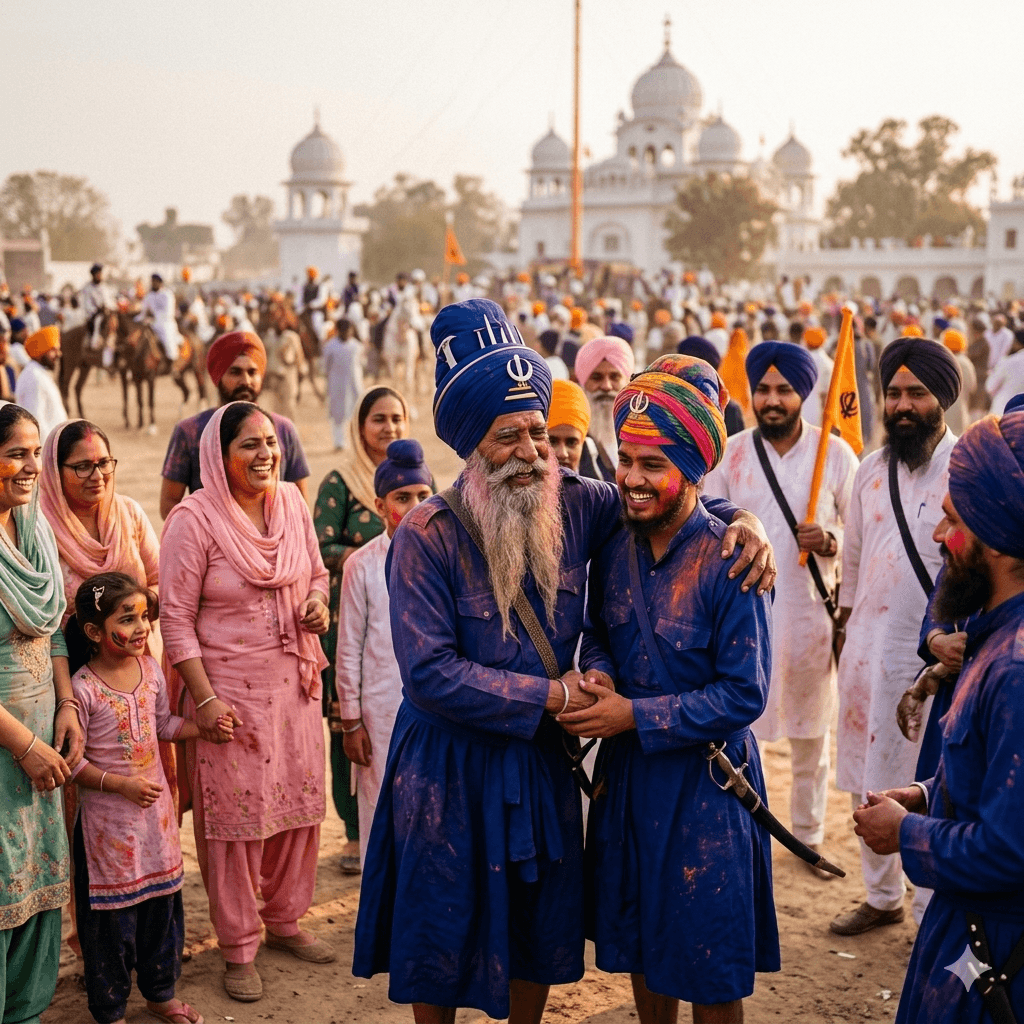
Hola Mohalla is a significant Sikh festival that celebrates martial spirit, brotherhood, and community service. The festival has its roots in the story of Prahlad, who defied his father, Hiranyakashipu, and worshipped Lord Vishnu, ultimately leading to the triumph of good over evil.
History and Significance
Guru Gobind Singh, the tenth Sikh Guru, initiated Hola Mohalla in 1701 as a response to the socio-political conditions of the time. The festival was designed to prepare Sikhs for battle, showcasing their martial skills and bravery. The term “Hola Mohalla” means “mock fight” or “organized procession,” symbolizing the Sikh community’s readiness to defend themselves and others.
Celebrations and Traditions
Hola Mohalla is celebrated over three days in Anandpur Sahib, Punjab, with various events and activities, including:
– Mock Battles: Sikhs demonstrate their martial skills, engaging in simulated battles and showcasing their bravery.
– Processions: Colourful processions, accompanied by war drums and standard-bearers, take place, highlighting the Sikh community’s unity and strength.
– Gatka Displays: Nihang Sikhs, traditional warriors, display their mastery of Gatka, the Sikh martial art.
– Kirtan and Poetry: Devotional music and poetry recitals are performed, emphasizing the spiritual essence of Sikhism.
– Langar: Community meals are served, promoting equality, generosity, and selfless service.
Modern Celebrations
Today, Hola Mohalla is celebrated not only in Anandpur Sahib but also in other Gurudwaras worldwide. The festival has evolved, incorporating modern elements while retaining its core essence. It’s a time for Sikhs to reconnect with their heritage, strengthen community bonds, and celebrate their rich cultural traditions.
Together We Can Foundation
Leave a Reply
You must be logged in to post a comment.