World First Aid Day: Small Actions Can Save Lives
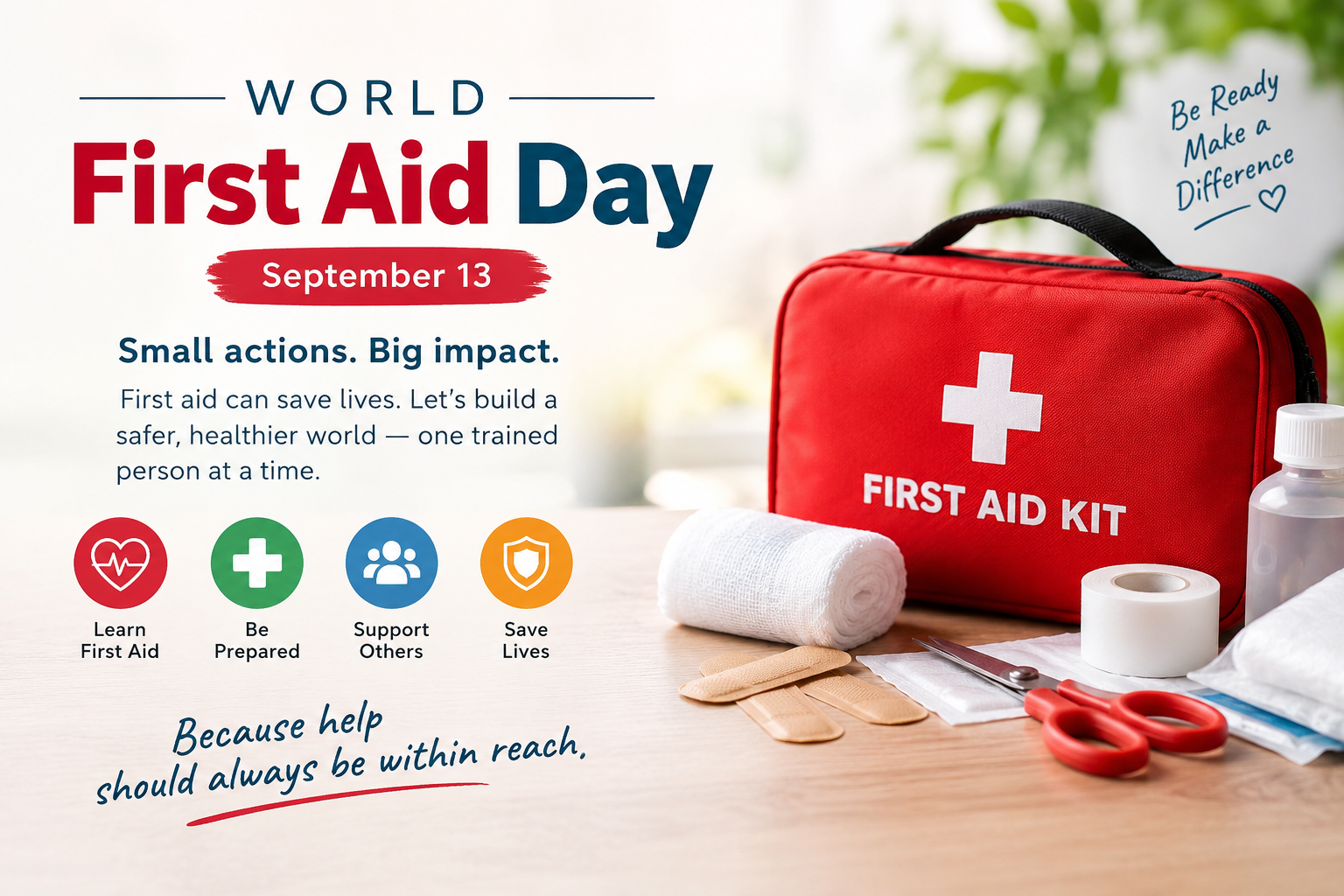
Every year, World First Aid Day reminds us of a simple but powerful truth: first aid can save lives. In an emergency, the first few minutes can make a significant difference, and knowing what to do before professional medical help arrives can prevent a situation from becoming worse.
What Is World First Aid Day?
World First Aid Day is observed every year on the second Saturday of September. The day is an opportunity to raise awareness about the importance of first aid and encourage people to learn basic life-saving skills.
First aid is not only for doctors, nurses, or emergency responders. Anyone can learn it. A trained student, teacher, parent, colleague, neighbour, or bystander may be the first person available to help someone who is injured or suddenly becomes ill.
Why Is First Aid Important?
Accidents and emergencies can happen anywhere—at home, on the road, at school, at work, or while travelling. A person may experience severe bleeding, burns, choking, fainting, fractures, or other emergencies.
Appropriate first aid can help to:
– Protect the injured person from further harm
– Control bleeding
– Support breathing and circulation
– Reduce the risk of complications
– Provide reassurance until medical professionals arrive
– Potentially save a life
However, first aid should be provided within the limits of your training, and professional emergency medical help should be sought whenever necessary.
Basic First-Aid Skills Everyone Should Know
1. Severe Bleeding
Apply firm, direct pressure to the wound using a clean cloth, dressing, or bandage. If blood soaks through, add more material rather than repeatedly removing the original dressing. Seek emergency medical assistance for serious bleeding.
2. Burns
Cool a minor burn under cool running water for about 20 minutes as soon as possible. Do not apply ice, butter, toothpaste, or other household substances to the burn. Serious or extensive burns require urgent medical attention.
3. Choking
If someone is choking and cannot breathe, speak, or cough effectively, immediate first-aid intervention is required. If the person becomes unresponsive, call emergency services and begin appropriate resuscitation according to your training.
4. Fainting
Help the person lie down safely and protect them from injury. If they do not quickly recover, have difficulty breathing, are injured, or remain unconscious, seek emergency medical assistance.
5. Cardiac Arrest
Knowing CPR (cardiopulmonary resuscitation) and how to use an AED (automated external defibrillator) can be lifesaving when someone is in cardiac arrest. Emergency services should be contacted immediately, and CPR should be started according to recognised training and local guidance.
First Aid Is Everyone’s Responsibility
One of the biggest misconceptions about first aid is that you need to be a healthcare professional to help. In reality, basic first-aid education can empower ordinary people to respond confidently during emergencies.
Schools, colleges, workplaces, communities, and families can all benefit from first-aid training. Keeping a well-stocked first-aid kit in accessible places is also an important part of emergency preparedness.
Learn First Aid. Be Ready to Help.
World First Aid Day is more than a date on the calendar. It is a reminder that being prepared can make a difference when every second matters.
Take the opportunity to learn basic first aid, refresh your CPR skills, know your local emergency number, and encourage others around you to get trained.
You may never know when you will need these skills—but when an emergency happens, knowing what to do can make all the difference.
Remember:
Learn first aid. Stay prepared. Help safely. Save lives.
Together We Can Foundation
Leave a Reply
You must be logged in to post a comment.