
Navratri Day 4: Maa Kushmanda – The Goddess of Energy, Health, and Prosperity
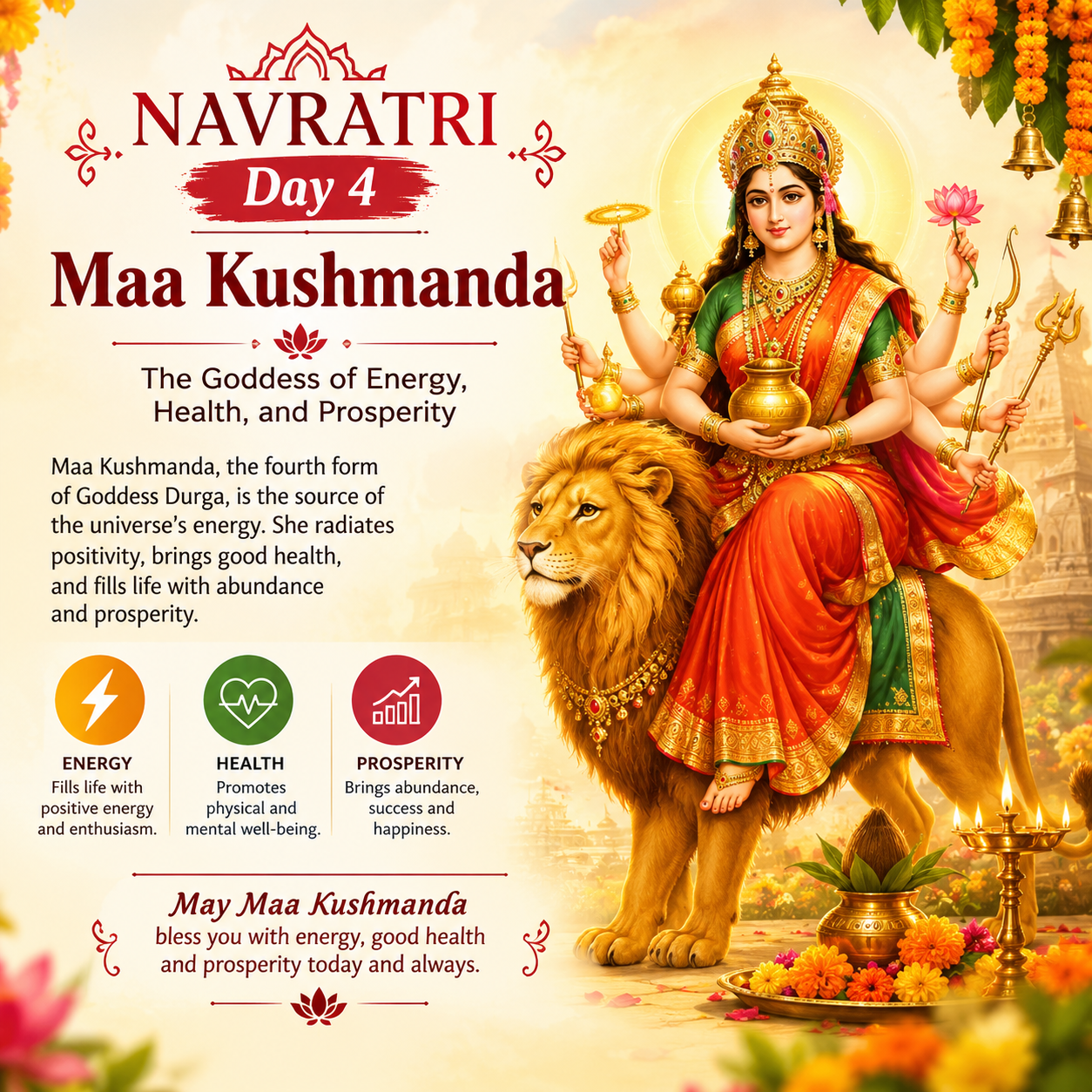
Navratri is one of the most auspicious Hindu festivals, celebrated with great devotion, faith, and enthusiasm across India. The nine days of Navratri are dedicated to the nine divine forms of Goddess Durga, each representing a unique quality of strength, courage, wisdom, and positivity. The fourth day of Navratri is dedicated to *Maa Kushmanda*, the fourth form of Navdurga, who symbolizes the creation of the universe, divine energy, happiness, and prosperity.
Maa Kushmanda is worshipped by devotees seeking good health, peace, strength, and success in life. Her name is associated with the cosmic energy believed to have brought light and life into the universe. This day reminds us of the importance of positivity, inner strength, and maintaining a healthy balance between our physical, mental, and spiritual well-being.
Who Is Maa Kushmanda?
Maa Kushmanda is considered the creator of the universe through her divine smile. According to Hindu mythology, when darkness prevailed everywhere, Maa Kushmanda illuminated the universe with her radiant energy. She is therefore associated with light, warmth, vitality, and the power of creation.
She is commonly depicted with eight hands holding various divine objects, including a lotus, bow, arrow, discus, mace, rosary, and a pot of nectar. She is also known as Ashtabhuja Devi because of her eight arms. Her divine form represents courage, wisdom, nourishment, and the ability to overcome difficulties.
Devotees believe that worshipping Maa Kushmanda brings positivity, removes negativity, and helps individuals develop confidence and determination. Her blessings are associated with happiness, prosperity, and spiritual growth.
Spiritual Significance of Navratri Day 4
The fourth day of Navratri holds special spiritual importance. Maa Kushmanda represents the energy that sustains life and encourages people to recognize the divine power within themselves.
This day teaches us that even a small amount of positivity can bring significant changes to our lives. Just as light removes darkness, positive thoughts and good actions can help us overcome challenges and move towards a better future.
Devotees offer prayers, flowers, fruits, and other traditional offerings to Maa Kushmanda. Many people observe a fast and participate in devotional activities to seek her blessings. The colour associated with the fourth day may vary according to regional traditions and the Navratri calendar followed.
Beyond religious rituals, the day provides an opportunity to reflect on our habits, strengthen our relationships, practice gratitude, and adopt a healthier lifestyle.
Maa Kushmanda and the Importance of Health
The worship of Maa Kushmanda is associated with energy, vitality, and well-being. Although religious faith and medical science are different, the values of discipline, positivity, and self-care encouraged during Navratri can support a healthier lifestyle.
Health is not limited to the absence of illness. It includes physical fitness, mental peace, emotional stability, proper nutrition, and healthy social relationships.
During the festive season, people often change their eating schedules because of fasting and celebrations. Therefore, it is important to pay attention to the body’s nutritional needs and maintain healthy routines.
1. Maintain a Balanced Diet During Fasting
Many people observe fasts during Navratri by consuming selected foods such as fruits, milk, curd, nuts, and dishes prepared with permitted fasting ingredients.
A nutritious fasting diet should provide adequate energy, protein, vitamins, minerals, and fluids. Include a variety of suitable foods rather than depending only on fried snacks, sweets, or sugary drinks.
Some healthy choices include:
– Fresh fruits such as apples, bananas, oranges, and papaya.
– Nuts and seeds in moderate quantities.
– Milk, curd, or other suitable protein-rich foods.
– Meals prepared with permitted ingredients, such as buckwheat or water chestnut flour.
– Vegetables and other nourishing foods allowed under your fasting tradition.
People with diabetes, kidney disease, or other medical conditions should consult a healthcare professional before making significant changes to their eating patterns or observing prolonged fasts.
2. Stay Hydrated Throughout the Day
Water plays an essential role in regulating body temperature, supporting digestion, and maintaining normal bodily functions.
During fasting, some people may experience headaches, weakness, dizziness, or tiredness if they do not consume enough fluids or calories.
To maintain hydration:
– Drink water regularly throughout the day.
– Include water-rich fruits where appropriate.
– Avoid excessive caffeine and very sugary beverages.
– Do not ignore signs of dehydration, such as unusual thirst, dark urine, or dizziness.
If your fasting practice restricts water, consider your individual health needs and seek medical advice, particularly if you take medication or have an existing medical condition.
3. Keep Your Energy Levels Stable
Long gaps between meals and inadequate food intake can make some people feel weak or tired during Navratri.
To support your energy levels, eat balanced meals during permitted eating periods. Combine suitable sources of carbohydrates, protein, and healthy fats instead of relying entirely on sweets or starchy foods.
For example, a meal containing curd, fruit, nuts, and an appropriate fasting grain may provide more balanced nourishment than a meal consisting only of fried snacks.
Listen to your body and avoid strenuous physical activity if you feel weak, dizzy, or unwell.
4. Take Care of Your Mental Health
Navratri is also a time for prayer, meditation, gratitude, and reflection. These practices may help people relax, manage everyday stress, and feel more connected to their values and community.
You can support your mental well-being by:
– Spending a few minutes in quiet meditation.
– Practising slow, comfortable breathing.
– Taking breaks from stressful activities.
– Connecting with family and friends.
– Maintaining a regular sleep schedule.
– Focusing on gratitude and positive actions.
Remember that positivity does not mean ignoring difficult emotions. If stress, anxiety, or low mood becomes persistent, seeking appropriate professional support is a positive step towards better health.
Healthy Habits to Follow on Navratri Day 4
The fourth day of Navratri can inspire us to adopt small but meaningful lifestyle changes.
*Eat mindfully:* Choose nourishing foods and pay attention to hunger and fullness cues.
*Stay physically active:* If you feel well, engage in gentle activities such as walking, stretching, or light yoga.
*Sleep adequately:* Most adults benefit from around seven to nine hours of sleep each night.
*Maintain personal hygiene:* Wash your hands before preparing or eating food and ensure that fruits and other ingredients are handled safely.
*Avoid overeating:* Festive foods can be enjoyed in moderation. Eating slowly helps you recognize when you are comfortably full.
*Practice gratitude:* Take time to appreciate your health, family, relationships, and the opportunities you have.
These habits can be followed throughout the year, not just during Navratri.
Traditional Bhog and Offerings to Maa Kushmanda
Devotees offer different foods to Maa Kushmanda according to local customs and family traditions. Malpua, fruits, sweets, and other vegetarian preparations are among the offerings associated with worship in various traditions.
When preparing bhog, cleanliness and freshness are important. Use clean utensils, wash your hands, and store perishable foods safely.
After the religious rituals, offerings may be shared as prasad among family members and devotees. Sharing food also reflects the values of generosity, togetherness, and community.
The Importance of Charity and Kindness During Navratri
Navratri is not only a celebration of devotion but also an opportunity to serve others. Acts of kindness, compassion, and charity reflect the positive values associated with the worship of Goddess Durga.
You can celebrate the fourth day by:
– Providing nutritious food to people in need.
– Supporting underprivileged children with essential supplies.
– Helping elderly people or neighbours.
– Promoting hygiene and healthy eating habits.
– Reducing food waste and sharing surplus food safely.
– Encouraging children to develop healthy daily routines.
Even a small act of kindness can make a meaningful difference in someone’s life. Nourishing others through food, care, and awareness is a wonderful way to express compassion during the festive season.
How to Celebrate Navratri Day 4 with Family
Families can make this day more meaningful by combining traditional rituals with healthy and positive activities.
Begin the day with prayer and seek Maa Kushmanda’s blessings. Prepare a clean and nutritious meal according to your family’s fasting traditions. Spend time with family members, participate in devotional songs, and encourage children to learn about the cultural significance of Navratri.
You can also organize a small community activity focused on food safety, nutrition, cleanliness, or helping people in need.
These activities bring families and communities closer while teaching younger generations the importance of faith, kindness, responsibility, and well-being.
Conclusion
Navratri Day 4 is dedicated to Maa Kushmanda, the divine form associated with the creation of the universe, light, energy, and prosperity. Her worship reminds devotees of the importance of positivity, strength, gratitude, and faith.
The festival also provides a valuable opportunity to reflect on our everyday habits. By eating nutritious food, staying hydrated, getting adequate sleep, caring for our mental health, and helping those in need, we can make the celebration more meaningful.
Let us welcome this auspicious day with devotion in our hearts, kindness in our actions, and a commitment to healthier living.
*May Maa Kushmanda bless everyone with happiness, peace, prosperity, strength, and good health.*
*Happy Navratri! Jai Mata Di!* 🙏🌺
Together We Can Foundation
Leave a Reply
You must be logged in to post a comment.