
Pongal: A Vibrant Harvest Festival of South India
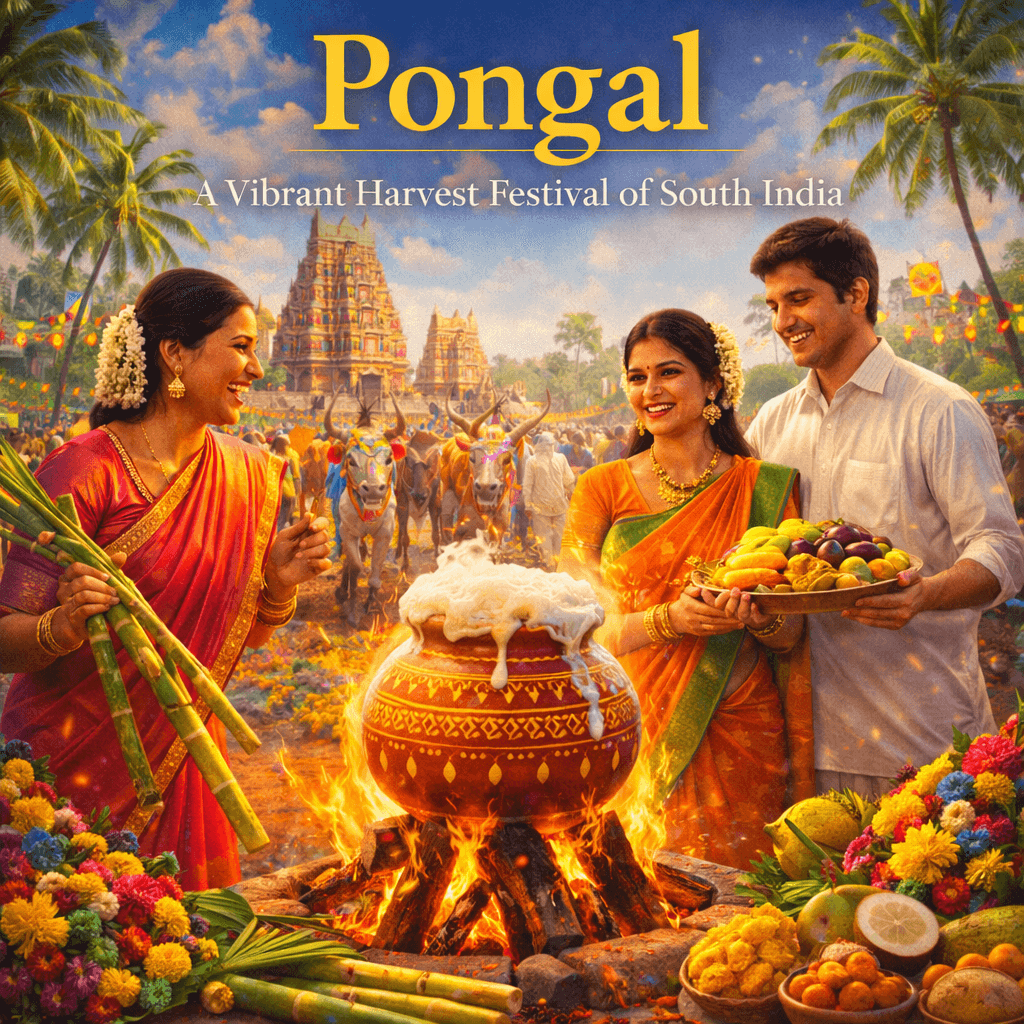
Pongal, also known as Thai Pongal, is a joyous harvest festival celebrated primarily in Tamil Nadu, marking the beginning of the sun’s journey towards the northern hemisphere. Observed on January 14 or 15, it’s a time to express gratitude to nature, the sun, and farm animals for a bountiful harvest.
The Significance of Pongal
Pongal holds immense cultural and spiritual significance:
– Harvest Celebration: Pongal marks the harvesting of rice, milking of cows, and thanksgiving to nature.
– Solar Transition: Celebrates the sun’s journey, symbolizing renewal and prosperity.
– Community Bonding: Strengthens family ties and community spirit.
Traditions and Customs
Pongal is a vibrant festival filled with colorful traditions:
– Pongal Dish: The festival’s centerpiece, a sweet rice dish made with freshly harvested rice, jaggery, and milk, is offered to the sun god.
– Decorations: Homes are adorned with intricate kolam designs and banana leaves.
– Cattle Worship: Cows and bulls are decorated and worshiped for their role in farming.
– Traditional Games: Events like Jallikattu (taming wild bulls) and Uri Adithal (breaking a clay pot) add excitement.
Types of Pongal Celebrations
– Bhogi Pongal: Celebrated on January 13, marking the eve of Pongal, with bonfires and cleaning of homes.
– Surya Pongal: The main day, offering Pongal to the sun god.
– Mattu Pongal: Cattle worship and festivities on January 15.
– Kaanum Pongal: A day for family gatherings and outings.
Why Pongal is Special
Pongal signifies:
– Gratitude: Thanking nature and animals for their bounty.
– Renewal: Celebrating the sun’s journey and new beginnings.
– Cultural Heritage: Showcasing Tamil Nadu’s rich traditions and customs.
Together We Can Foundation
Leave a Reply
You must be logged in to post a comment.