
Lohri: A Vibrant Harvest Festival of India
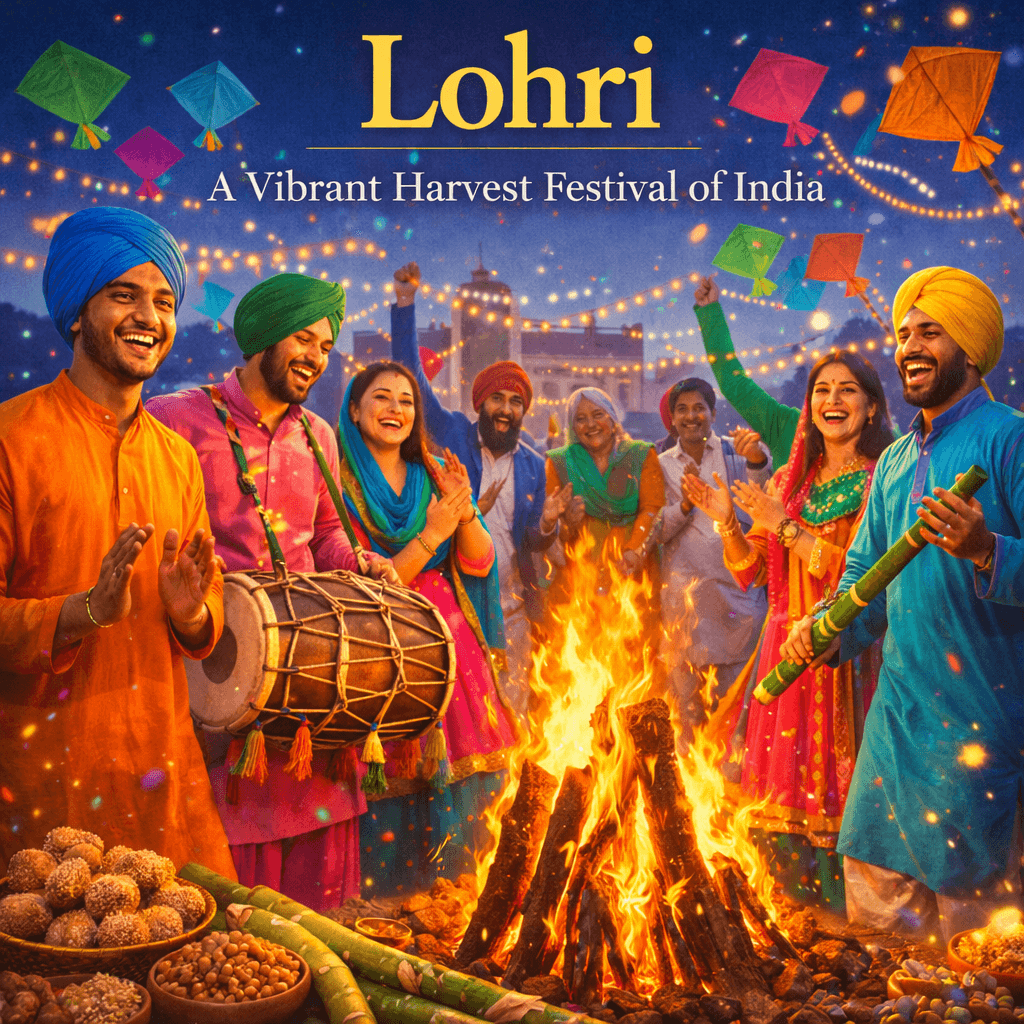
Lohri is a joyous harvest festival celebrated primarily in northern India, particularly in Punjab, Haryana, and Himachal Pradesh. Observed on January 13, it’s a time to bid farewell to winter and welcome longer days and warmer temperatures. The festival marks the harvesting of rabi crops like wheat, mustard, and sugarcane, and is a celebration of the land’s fertility and prosperity.
The Story Behind Lohri
Lohri is deeply rooted in Indian mythology and folklore. One popular legend is that of Dulla Bhatti, a 16th-century rebel who fought against the Mughal emperor Akbar. Known as the “Robin Hood of Punjab,” Dulla Bhatti rescued girls from being sold into slavery and arranged their marriages, earning him a special place in Punjabi folklore. Lohri songs often recount his bravery and heroism.
Celebrations and Traditions
Lohri is a vibrant festival filled with colorful traditions:
– Bonfire: The centerpiece of Lohri celebrations, the bonfire symbolizes the warmth and light of the sun. People gather around, singing and dancing, and toss offerings like sesame seeds, jaggery, and popcorn into the flames.
– Traditional Attire: People wear vibrant traditional clothes, often adorned with intricate designs and patterns.
– Folk Dances: Bhangra and Gidda performances add to the festive atmosphere.
– Delicious Food: Traditional treats like makki di roti, sarson da saag, and gajjak are savored during Lohri.
Significance of Lohri
Lohri holds immense cultural and agricultural significance:
– Harvest Festival: Lohri marks the harvesting of rabi crops, thanking the land and sun for their bounty.
– Community Bonding: The festival brings people together, strengthening community ties and fostering unity.
– New Beginnings: Lohri signifies the end of winter and the beginning of longer, warmer days.
Together We Can Foundation
Leave a Reply
You must be logged in to post a comment.